The best hedge plants: a comparison for projects
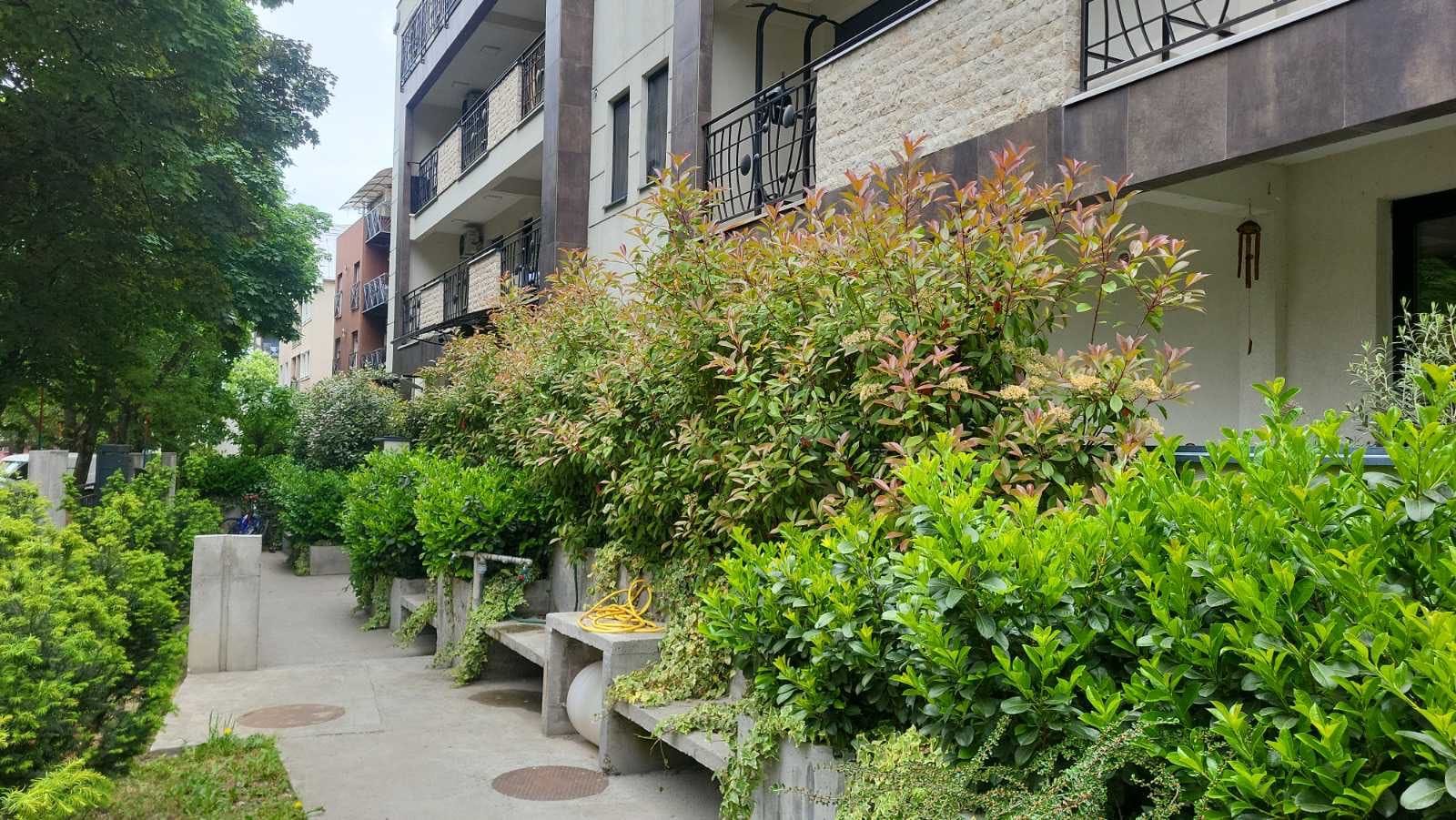
There is no single 'best' hedge plant. The choice depends on the available space, sun exposure, the desired height, how quickly you need privacy and how much time you can spend on maintenance. Below we compare the hedge plants most widely used in residential, commercial and public projects.
Comparison table
| Plant | Growth per year | Shade | Drought | Plants / m | Trims per year |
|---|
| Thuja Smaragd | 20–30 cm | Partial shade | Medium | 2–3 | 0–1 |
| Cherry laurel | 30–50 cm | Yes, also full shade | Medium | 2–3 | 1–2 |
| Photinia Red Robin | 30–40 cm | Partial shade | Medium | 2–3 | 2–3 |
| Leyland cypress | 60–100 cm | Partial shade | Medium | 1.5–2 | 2–3 |
| Yew | 15–20 cm | Yes, also full shade | Medium | 3–4 | 1–2 |
| Lonicera nitida | fast | Partial shade | Medium | 3–4 | 2–3 |
| Oriental thuja | moderate | Partial shade | Good | 2–3 | 0–1 |
The values are indicative and depend on soil, climate and care, but they show the differences between species well.
Thuja Smaragd – the classic, narrow, neat hedge
Thuja Smaragd is the most popular hedge plant in Romania. It takes up little width, keeps its emerald-green colour in winter and does not need frequent trimming. Its main drawbacks are sensitivity to drought in the first years and slower growth. It is the right choice for private gardens, residential developments and places where the hedge must be narrow.
Cherry laurel – dense, fast and shade-tolerant
Cherry laurel has large, glossy leaves and quickly forms a dense visual and noise screen. It tolerates shade better than almost any other hedge plant, so it is very good in courtyards and between buildings. However, it takes up more width and needs trimming once or twice a year. For a detailed comparison, see Cherry laurel or thuja.
Photinia Red Robin – a hedge with colour
Photinia Red Robin produces bright red shoots in spring and after every trim. It is used on its own or combined with cherry laurel for hedges with colour accents at offices, commercial sites and residential developments. It prefers sunny sites and well-drained soils and is hardy to about -15°C.
Leyland cypress – the fastest tall hedge
If you need a tall hedge in a short time, Leyland cypress is hard to beat: it grows 60–100 cm per year. It suits windbreaks and screens around large properties, warehouses or industrial zones. It must be trimmed regularly, 2–3 times a year, because it does not regrow if cut back into old wood.
Yew – for clipped hedges and shade
Yew grows slowly but is very long-lived, tolerates shade and can be clipped into precise shapes. It is preferred in formal gardens and premium landscaping. All parts of the plant are toxic, so it is not recommended next to playgrounds.
Lonicera nitida – low borders, an alternative to box
For low hedges and borders, Lonicera nitida is one of the best alternatives to box, which is affected by the box tree moth. It tolerates repeated trimming very well and grows quickly.
How to choose: quick recommendations
- Narrow space, neat look, minimal maintenance: Thuja Smaragd.
- Shade, courtyards, noise screen: cherry laurel.
- Tall hedge, very fast: Leyland cypress.
- Colour and decorative accents: Photinia Red Robin.
- Hot, dry areas: oriental thuja.
- Low borders, formal gardens: Lonicera nitida or yew.
All these plants are available wholesale, in large quantities and uniform batches. See the full range in the wholesale hedge plants category or ask for a recommendation for your project via the contact page.
Frequently asked questions
What is the best hedge plant for shade?
Cherry laurel and yew are the most suitable for shade; Thuja Smaragd and Leyland prefer sun or partial shade.
Which hedge stays green in winter?
All the plants in the table are evergreen and stay green in winter: thuja, cherry laurel, Photinia, Leyland, yew and Lonicera nitida.
Plants from this guide, available wholesale